
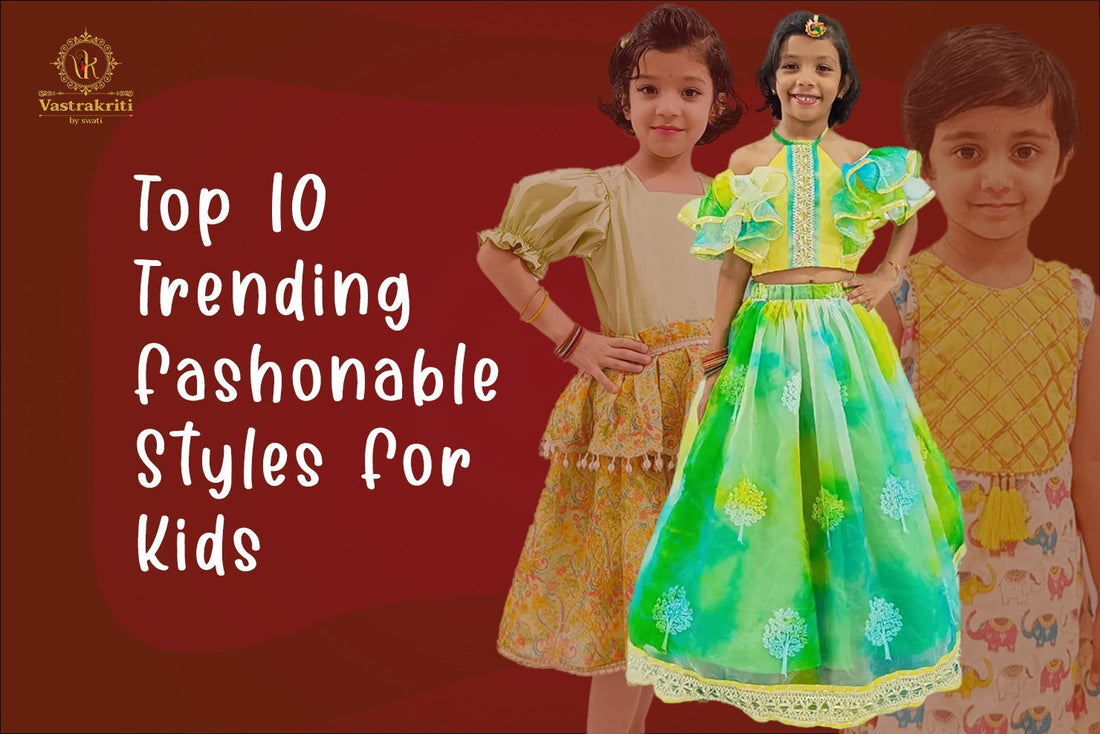
Weddings are probably the occasion where the stakes feel highest. You want your child to look good in photographs that will exist forever. You also want them to actually enjoy the day — not spend it tugging at an uncomfortable neckline or refusing to sit down because the outfit is too stiff.
Here's what I've learned from making kids ethnic wear, and from the feedback I get from parents after every wedding season.
Fabric is the decision that matters most
Most parents start with colour or design. Fabric should come first, because the wrong fabric makes everything else irrelevant. A child in heavy raw silk at a May wedding is going to be miserable by the second hour regardless of how beautiful the outfit looks.
For Indian weddings, the best fabrics for children are soft silk, satin with cotton lining, and organza with cotton lining. These look rich in photographs, hold embroidery and gota work well, and don't overheat the way heavier brocades and velvets do. Cotton lining inside a satin or organza outfit is the detail that separates something a child can wear all day from something they'll last two hours in.
For winter weddings — November through February — slightly heavier silk is fine. For any wedding from March onwards, stick to lighter constructions.
The lining question nobody asks
Most parents don't think to ask about lining until they've had one bad experience. Unlined satin is scratchy against a child's skin, especially around the waist and arms. When you're looking at an outfit online, check the description for cotton lining — if it's not mentioned, it probably isn't there.
All the girls lehenga sets and party gowns in the VKbySwati collection use cotton lining as standard. It's one of the things I won't compromise on.
Waistband fit on lehengas
Lehenga waistbands are the most common fit issue. A child who's grown two centimetres since the last time you measured them will find a fixed waistband uncomfortable by the end of a long reception. Look for drawstring or elasticated waistbands — they give you flexibility and mean the outfit can be worn across a size range rather than fitting perfectly one day and being too tight the next.
Most VKbySwati lehengas have an elasticated or drawstring back, giving about 2 inches of room in either direction. Check the size guide before ordering if you're between sizes.
For boys: comfort over formality
Boys at weddings need to move. They'll be running around with cousins, sitting through long ceremonies, and almost certainly doing something that involves the floor. A full sherwani is beautiful but genuinely restrictive for younger children. A well-made silk kurta set with a dhoti or churidar is far easier for a child to manage, looks completely appropriate for any wedding function, and can usually be hand-washed afterwards.
For boys under 6, a kurta set over a sherwani every time. For boys 8 and older who specifically want to dress up, a silk kurta with a Nehru jacket hits the right balance of formal and functional.
Sizing: always go one size up for weddings
Wedding outfits get worn for long days. A size that fits perfectly in the morning can feel tight by the evening, especially around the waist after a good meal. For any occasion that runs four hours or more, go one size up from your child's exact measurement. The outfit will look fine — children's ethnic wear is cut with a bit of room — and your child will be comfortable the entire day.
Our size guide has detailed measurement instructions. If you're unsure, message us before ordering and we'll advise on the right size for the specific style.
The sibling twinning photograph
If you have a son and daughter attending the same wedding, it's worth planning their outfits together. You don't need identical outfits — you need complementary ones. A sea green lehenga for the girl with a sea green and ivory kurta for the boy. Something that reads as coordinated in a photograph without looking like a costume.
Browse the sibling twinning collection and use colour as the coordinating thread — it's the simplest approach and it almost always works.